Department of Recreation Studies Department of Recreation Studies Student Research 2026
RECR 4400 Research Summaries (2026)
How does the City of Richmond identify and address barriers to recreation participation for adult newcomers, and how can its recreation programs and services be improved?
Ethan Haldeman
The City of Richmond identifies barriers to recreation participation for adult newcomers through a community needs assessment conducted every five years, census data from Statistics Canada, and feedback from the Richmond Intercultural Advisory Committee and the Richmond Local Immigration Partnership, which gather insights on community needs, trends, and gaps in programs and services. In addition, the City supports newcomers through initiatives such as the Richmond Fee Subsidy Program, programs delivered in partnership with settlement agencies like S.U.C.C.E.S.S., and other supports including the Richmond Bus Tour program, Walk Richmond, and Richmond Family Place programs. However, there are four common barriers that continue to impact adult newcomers: language, financial hardship, time constraints, and transportation, and there is also a lack of programs tailored to adult newcomers, as most are offered to the senior demographic, along with a lack of public awareness of available resources and services. Therefore, the City of Richmond’s recreation programs and services can be improved by creating a social prescription program, developing a “Welcome to Richmond" information package, implementing a consolidated leisure guide, delivering a targeted marketing campaign, and increasing recreation representation at the Richmond Intercultural Advisory Committee.
How does the City of Richmond identify and address barriers to recreation participation for adult newcomers, and how can its recreation programs and services be improved?
Lora Anderson
The answer to this research question is that participation in organized sport between the ages of 6–18 has a significant influence on whether women remain involved in sport after age 40. Early participation helps girls develop confidence, competence, positive attitudes, and social connections—key attributes and predictors of lifelong engagement identified in both primary and secondary research. When girls have positive experiences in sport during childhood and adolescence, they are more likely to view themselves as competent athletes and more likely to continue or re-engage in participation in other stages of life. Conversely, negative experiences, early dropout, or limited access to programs during youth often create barriers that negatively affect returning to sport in adulthood. Overall, while participating in youth does not mean it is the cause of adult participation, it strongly shapes women’s attitudes, motivations, and likelihood of remaining active in sport over the age of 40. To answer this question from the point of view of an adult and to get direct insight as to why they continue to participate, primary research would have needed to include first-hand accounts from women over 40.
What role do lesson content and staff training play in empowering swim instructors to deliver high-quality adapted swimming lessons in the City of Surrey?
Emma King
Lesson content and staff training play a central role in empowering swim instructors to deliver high-quality adapted swimming lessons by directly shaping their confidence, preparedness, and ability to respond to diverse learner needs. The research shows that when lesson content is structured, predictable, and supported with strategies such as visual aids, demonstrations, and breaking skills into smaller steps, instructors are better able to create inclusive and effective learning environments. At the same time, staff training is essential in building instructor self-efficacy, particularly when it is practical, hands-on, and focused on real teaching scenarios such as behaviour support, communication strategies, and lesson modifications. Without these supports, instructors often feel uncertain and rely on inconsistent approaches, which can impact lesson quality and participant outcomes. Together, lesson content and staff training are interconnected and, when supported by strong organizational systems, enable instructors to feel confident, adaptable, and capable of delivering safe, inclusive, and high-quality adapted swimming lessons.
How accessible is the City of Vancouver's Leisure Access Pass application process for individuals who are not fluent in English?
Brandon Nguyen
The research findings indicate that the City of Vancouver's Leisure Access Pass (LAP) application process plays an important role in reducing financial barriers to recreation, but it is not fully accessible for individuals who are not fluent in English. While the program is designed to support inclusive participation, the structure of the application process presents challenges related to administrative language, documentation requirements, and familiarity with government systems. Applicants are required to interpret tax-related terminology, such as income reporting and specific line references, and must obtain documents like proof of income through the Canada Revenue Agency, which can be difficult without prior experience or language proficiency. The study also found that front-line staff play a significant role in assisting applicants by explaining instructions, clarifying requirements, and guiding them through the process. However, relying heavily on community centre front desk staff for support suggests that the application itself is not easily understood for the applicant. Although language supports such as translated materials and phone-based translation services exist, they are limited in availability and does not fully address the challenges applicants encounter. Overall, the accessibility of the LAP application process is influenced not only by the availability of financial assistance but by how clearly the process is communicated and how easily applicants can navigate it on their own.
How can the City of Burnaby improve swim lessons and public swims to better serve people with autism?
Justin Prevost
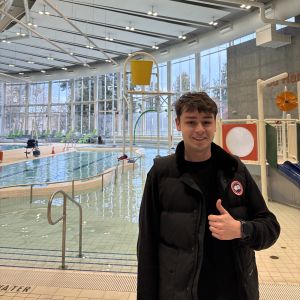
This study examined how public swim programs and swim lessons in Burnaby can be made more inclusive for individuals with autism. The findings identified several key challenges, including high noise levels, crowded environments, and the fast pace of lessons, all of which may contribute to discomfort for some swimmers. Through interviews and observations, it was also noted that instructors already make efforts to support participants by slowing down activities, repeating instructions, and providing demonstrations. However, these strategies are not applied consistently across all programs.
A central finding of the research is that small, intentional changes can have a significant impact. Recommended improvements include enhanced staff training, increased use of visual teaching methods, the development of more predictable lesson structures, and the introduction of sensory-friendly swim times with reduced noise and fewer participants. Overall, the findings suggest that the City of Burnaby does not need to fully redesign its programs; rather, targeted adjustments can make swim lessons and public swim sessions more accessible and supportive for individuals with autism.
What factors contribute to lower participation among female students in intramural sport programs at Kwantlen Polytechnic University, and what strategies could intramural programs implement to increase female participation?
Kayleigh Beaubien
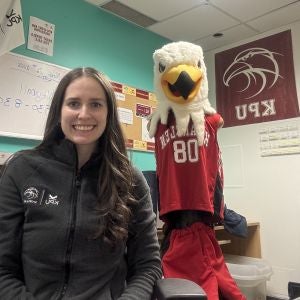
The answer to this question, I believe, is not a simple one, as many factors contribute both to the barriers to participation as well as the strategies that could be implemented. My research showed me that when it comes to females in any sport, social connection is the greatest factor to participation, as girls are most likely to participate only if they have a friend who will also be participating. In addition, it is so needed that there is female representation within the intramural programs to further encourage participation. If girls see that the gym is full of only boys, they won't bother trying to check it out to participate, but if they see a full room of girls, they would be more likely to feel a sense of belongingness, thus leading to more participation trials. The intramural programs as a whole have shown that the number of students participating has fallen as a result of lower international student enrollment and the removal of alumni participation, demonstrating the department's need to shift its focus to engaging its domestic students at KPU. The research showed that there is room to adjust program structuring, such as flexible intramural times or female-only intramural sports, as well as further reducing the financial barriers to further increase student engagement.
What strategies can be introduced to increase older adults' participation in recreation programs at Killarney Community Centre?
Casey Hudson
This research looked at what is currently limiting older adults from participating in recreation programs at Killarney Community Centre, and what strategies can be introduced to improve their experience and increase participation. Through interviews with staff from Vancouver, Burnaby, Richmond, and New Westminster, along with observations of programs like the seniors lunch, social programs, and special events at Killarney, a few consistent barriers came up. Many older adults are not always aware of what programs are available, or they feel hesitant to attend on their own, especially in a large multi-use facility. Transportation, language barriers, and health limitations also play a role. At the same time, the research showed that when programs are designed with social connection in mind, participation tends to be stronger. Observations showed that programs with built-in time for conversation, comfortable spaces, and a welcoming environment had higher engagement and enjoyment. Based on both the secondary research and content analysis of City of Vancouver documents, strategies like improving communication, offering more flexible and adaptable programming, and building stronger community partnerships can help reduce these barriers. Overall, the research highlights that increasing participation is not just about adding more programs, but about creating an environment where older adults feel comfortable, included, and actually want to come back.
