Student Resources & Support Services Earth Day
Earth Day in Canada
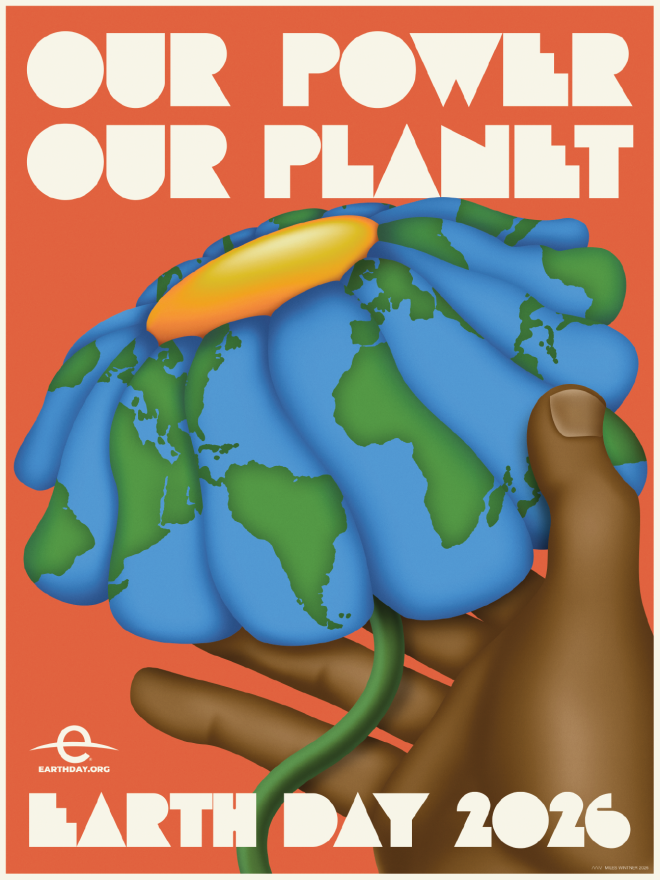
April 22, 2026, highlights the global celebration of Earth Day, a moment that continues to unite people in support of environmental protection and peace. Around the world, this day is recognized across 192 countries, with roughly one billion individuals participating each year in a powerful grassroots movement. The theme for this year, “Our Planet, Our Power,” emphasizes a fundamental truth: environmental progress is not driven by any single administration or moment in time. Instead, it is sustained through the everyday actions of communities, educators, workers, and families who actively protect the places where they live and work, demonstrating that collective responsibility shapes a more sustainable future for all.
Sustainability at the College
Langara is taking its own steps to improve sustainability on our campuses and within its community. Not only are principles of sustainability incorporated into classrooms through curriculum and leadership practices, but also in the Academic Plan, Strategic Plan, and Sustainability policy. In our campus’ built environment, Sustainability at Langara has been advancing in the following areas:
- The new central heating plant has been contributing to an overall 61% emissions reduction per square foot in greenhouse gas emissions since 2007.
- Installation of solar panels on the top of T Building, coupled with placing 46 EV charging stations on campus.
- A new “Friendlier” reusable container in the cafeteria is minimizing the use of single use items on campus, minimizing landfill contribution.
- Innovative student learning experiences that turn the campus into a sustainability “living lab”:
- 19 students contributed 150 volunteer hours towards campus sustainability projects this past term through participation in the Student Sustainability Leaders program.
- Many gardens on campus support pollinators and biodiversity, adding applied research and learning opportunities on campus.
Inequity and Earth Day
The Equity, Diversity, and Inclusion Office recognizes the strides made here on campus for Earth Day, but also wants to recenter the celebration on equity-deserving groups who are most impacted by climate change as well as environmental degradation. Earth Day was created by settlers, most of whom benefit from white supremacy, and focus largely on conservation (a concept rooted in terra nullius – Indigenous people have altered their environments since time immemorial), rather than being self-reflexive about the environmental movement as a whole.
Honouring the earth and sustainability are concepts inherent and integral to Indigenous ways of being within Canada and in other communities across the globe. A prime example within our own local context are sea gardens created by Indigenous peoples along the coast of so-called British Columbia. These ways of knowing (including land-based learning), which were implementing sustainability in space and place since time immemorial, were disrupted by the removal of Indigenous people from their land and from accessing resources.
Additionally, Environmental Racism has impacted Indigenous peoples as well as other equity deserving groups, particularly People of Colour, by forcing them to live (directly or indirectly) on environmentally degraded land. xʷəyeyət (Iona Island) the Waste Water Treatment Plant, located directly across from xʷməθkʷəy̓əm (Musqueam) remains the one of the only primary level treatment facilities in operation in North America. Its outflow contains dissolved contaminants and toxins which are pumped directly into the ocean. Metro Vancouver acknowledges that when it was built at the “front door” of xʷməθkʷəy̓əm in the 1960s, it was done so without consultation. This plant disrupted the health of culturally and dietary important food sources, damaged the soil and water, as well as negatively impacted the quality of life for xʷməθkʷəy̓əm people since it was first built. The Plant is slated to be updated along with a restoration of xʷəyeyət’s ecosystem in consultation with xʷməθkʷəy̓əm Nation by Metro Vancouver over the next decade.
Environmental racism also exposes equity-deserving groups to increasing amounts of pollutants that have resulted in individual as well as intergenerational health issues. For ecological disasters (which are intensifying because of climate change), they receive the least support, thus continuing to perpetuate systemic social and economic discrimination and inequities.
With these reflections in mind, we encourage you to explore, question, and engage ethically with Earth Day events across your city and utilize the resources, both included below:
Events
On-campus
- Library Climate Action Group Earth Day Stroll
Date and time | April 22, 2026, 2:00–3:00 pm
Meeting place | L Building, south entrance
Enjoy a group stroll around Langara Golf Course - Langara Cycling Club Earth Day Ride
Date and time | April 22, 2026, 4:00 pm
Meeting place: Langara Student Union Building, outside the Bike Shop
Participate in a group bike ride to UBC
Register now.
